
Learning the Holy Quran is a meaningful journey that requires dedication, patience, regular practice, and proper guidance. For Muslims living in Finland, finding suitable Quran lessons can sometimes be challenging because of busy schedules, school commitments, work responsibilities, and limited access to nearby Islamic educational institutions. Online learning has made Quran education more accessible, allowing students to study from home with qualified teachers.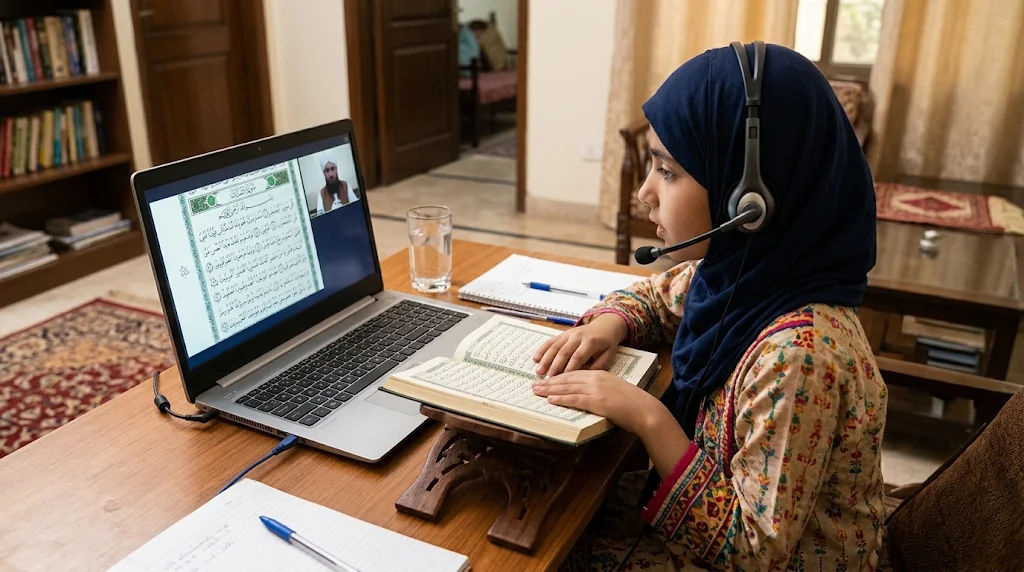
One common question among parents, adults, and young learners is whether online Quran programs include memorisation courses. The good news is that many online quran classes finland programs offer Hifz lessons designed for students who want to memorise the entire Holy Quran or selected Surahs. These lessons generally include individual instruction, regular revision, pronunciation correction, and structured memorisation plans.
Hifz is not simply about memorising verses. It also involves understanding the importance of consistency, maintaining correct pronunciation, and remembering previously learned portions. With suitable teachers and a well-organised schedule, students in Finland can work towards their memorisation goals without travelling to a physical Islamic centre.
This comprehensive guide explains how online Hifz lessons work, what students can expect, how teachers support memorisation, and what families should consider before choosing an online Quran learning program.
Hifz Lessons in Online Quran Education
Hifz refers to the memorisation of the Holy Quran. A person who memorises the complete Quran is traditionally known as a Hafiz, while a female memoriser is commonly called a Hafiza.
The memorisation journey requires a combination of listening, reading, repetition, revision, and guidance from a knowledgeable teacher.
Online Hifz lessons follow many of the same educational principles as traditional classroom teaching. The main difference is that students connect with their teachers through video conferencing platforms.
What Students Learn During Hifz Classes
Hifz lessons generally focus on several important learning activities.
-
Memorising new Quranic verses.
-
Repeating previously memorised passages.
-
Improving pronunciation and fluency.
-
Learning proper Tajweed rules.
-
Correcting common recitation mistakes.
-
Building confidence in Quran recitation.
-
Developing a consistent revision routine.
Teachers usually divide the Quran into manageable portions. This allows students to make steady progress instead of trying to memorise large sections too quickly.
The teacher also listens carefully to each student's recitation and identifies areas that require improvement.
Can Beginners Join Hifz Programs?
Yes, beginners may be able to join Hifz programs, depending on their reading ability and the course structure.
However, students who cannot yet read Arabic confidently may benefit from learning Quran reading first. Understanding Arabic letters, joining letters, recognising vowel signs, and practising basic pronunciation can make memorisation easier.
Some academies offer beginner preparation classes before introducing a formal Hifz schedule.
This approach helps students develop the necessary reading skills before moving towards more advanced memorisation.
How Online Quran Classes Finland Provide Hifz Lessons
Online Quran education has become a practical option for families who want Islamic learning to fit comfortably into their daily routines.
Many online quran classes finland providers offer individual Hifz sessions, allowing teachers to focus on the student's progress, pronunciation, and memorisation difficulties.
Although course structures vary between academies, most programs follow a similar learning process.
Individual Online Teaching Sessions
Individual classes allow students to receive personal attention from their teachers.
During a typical session, the teacher may begin by listening to previously memorised verses. After checking the student's revision, the teacher introduces a new portion for memorisation.
The student repeats the verses several times until becoming familiar with their sequence and pronunciation.
Individual lessons are particularly helpful because different students have different learning speeds. Some memorise quickly, while others need additional repetition.
A personal teaching arrangement allows the teacher to adjust the lesson according to these differences.
Group Hifz Classes
Some online Quran academies also provide group lessons.
Students participate in a shared virtual classroom where the teacher introduces memorisation techniques and listens to individual recitations.
Group learning can create a supportive educational environment. Students may feel encouraged when they see others working towards similar goals.
However, group classes may provide less individual speaking time than one-to-one lessons. Families should consider this when selecting a suitable program.
Flexible Learning Schedules
Finland has its own school, university, and working schedules. Families may also have different daily routines depending on their location and responsibilities.
Online teaching makes it possible to arrange classes at mutually convenient times.
Students can discuss suitable schedules with their academies, including weekday or weekend sessions where available.
Flexibility helps learners maintain regular Quran education without unnecessarily disturbing their other responsibilities.
The Step-by-Step Process of Memorising the Quran Online
Memorising the Quran requires an organised approach. Students generally achieve better results when they follow a consistent learning process rather than memorising randomly.
Step 1: Assessing the Student's Current Level
Before beginning Hifz, teachers usually evaluate the student's Quran reading ability.
They may ask the student to read selected passages to assess pronunciation, fluency, and familiarity with Tajweed.
This assessment helps determine whether the student is ready for memorisation or needs additional preparation.
For example, a student who reads Arabic fluently may begin memorising short Surahs or other selected portions.
A beginner may first need lessons covering Arabic letters, basic reading, and pronunciation.
Step 2: Setting Realistic Memorisation Goals
Every student has different learning abilities and available study time.
Some students may memorise a few verses during each lesson, while others may progress through larger portions.
Teachers should establish realistic targets based on the student's age, reading ability, and consistency.
A manageable target is generally more useful than an ambitious schedule that becomes difficult to maintain.
Step 3: Learning New Verses
Once the teacher introduces a new passage, the student listens carefully to its recitation.
The teacher may divide longer verses into smaller sections to make them easier to remember.
Students repeat each section while paying attention to pronunciation and the sequence of words.
After becoming familiar with individual sections, they practise reciting the complete passage.
Step 4: Reciting Without Looking
One important stage of Hifz is recalling memorised verses without reading directly from the Quran.
The teacher asks the student to recite the assigned portion from memory.
If the student forgets a word or makes a mistake, the teacher provides guidance and allows another attempt.
This process helps strengthen memory and develop confidence.
Step 5: Revising Previous Lessons
Revision is essential for long-term Quran memorisation.
Students should not focus entirely on new verses while ignoring previously memorised portions.
Teachers commonly divide revision into manageable sections so students can maintain what they have already learned.
Regular revision also helps identify passages that require additional practice.
Importance of Tajweed in Online Hifz Lessons
Tajweed refers to the rules governing the correct pronunciation and recitation of the Holy Quran.
It helps students pronounce Arabic letters accurately and observe the appropriate characteristics of Quranic recitation.
Hifz students should learn Tajweed alongside memorisation because memorising verses incorrectly can create difficulties later.
Correct Pronunciation of Arabic Letters
Arabic contains several letters that may sound similar to beginners.
However, these letters have different articulation points and pronunciation characteristics.
A qualified teacher helps students recognise these differences and correct their mistakes.
Online lessons allow teachers to listen to students through microphones and provide immediate feedback.
Good audio quality is important because unclear sound can make pronunciation correction more difficult.
Understanding Basic Tajweed Rules
Depending on the student's level, teachers may introduce rules such as:
-
Noon Sakinah and Tanween.
-
Meem Sakinah.
-
Madd and its different forms.
-
Qalqalah.
-
Rules of stopping and starting.
-
Characteristics of Arabic letters.
These rules support accurate recitation and help students develop stronger Quran reading skills.
Combining Memorisation With Proper Recitation
Students should aim to memorise verses with correct pronunciation from the beginning.
When Tajweed becomes part of the memorisation process, learners can develop better recitation habits.
This also makes revision more productive because students are practising both memory and pronunciation together.
Benefits of Online Quran Classes Finland for Hifz Students
Online Quran education offers several advantages for Muslim families living in Finland.
The learning experience can be adapted to different ages, educational backgrounds, and memorisation goals.
Learning From Home
One of the main advantages is the ability to attend lessons from home.
Parents do not need to arrange regular transportation to a Quran learning centre.
Students can participate in classes using a computer, tablet, or suitable smartphone.
A familiar learning environment may also help younger students feel more comfortable during their lessons.
Access to Qualified Quran Teachers
Physical distance does not necessarily limit access to experienced Quran teachers.
Online academies may connect students with instructors who have experience teaching Quran reading, Tajweed, and Hifz.
Families should still verify the qualifications and teaching experience of any instructor before enrolling.
A knowledgeable teacher can explain difficult passages, identify mistakes, and guide students through their memorisation journey.
Suitable for Different Age Groups
Hifz education is not limited to young children.
Teenagers and adults can also begin memorising the Quran according to their abilities and available time.
Some adults prefer shorter lessons because they have work or family responsibilities.
Children may benefit from more frequent guidance and age-appropriate teaching methods.
A suitable academy should understand these differences and adjust its teaching approach accordingly.
Better Time Management
Students in Finland often balance Quran education with regular school activities, homework, family commitments, and other responsibilities.
Online learning can reduce the time spent travelling.
This creates additional opportunities for revision and independent practice.
Students can also organise their memorisation sessions around their daily routines.
Opportunities for Consistent Learning
Consistency is one of the most important elements of successful Hifz.
Online classes can make it easier to maintain a regular learning schedule.
Even when students have busy weeks, they may be able to arrange shorter sessions or suitable alternative timings with their teachers.
The key is to maintain a realistic routine rather than depending on occasional intensive lessons.
How Much Time Does Quran Memorisation Take?
The time required to memorise the Quran depends on several factors.
There is no single timetable that works for everyone.
A student's age, reading ability, memory, available study hours, teacher guidance, and revision habits all influence progress.
Factors That Influence Hifz Progress
Previous Quran knowledge: Students who already read Arabic fluently may find it easier to begin memorisation.
Daily practice: Regular repetition helps students remember newly learned verses.
Revision quality: Reviewing previous portions prevents students from forgetting earlier lessons.
Teaching methods: Clear explanations and suitable memorisation techniques can improve the learning experience.
Personal commitments: School, work, and family responsibilities may affect the time available for study.
Students should avoid comparing their progress with other learners. Memorisation is an individual journey, and steady improvement is more important than speed.
Creating a Practical Memorisation Schedule
A good schedule includes three important activities:
-
Learning a new portion.
-
Revising recently memorised verses.
-
Reviewing older portions.
The amount of time allocated to each activity can change as the student progresses.
For example, a beginner may spend more time practising new verses. An advanced student may need additional revision to maintain previously memorised sections.
Teachers can help create a schedule that reflects the student's current level.
Choosing the Right Online Hifz Teacher in Finland
Selecting a suitable teacher is an important decision because the instructor plays a major role in the student's educational development.
Not every Quran teacher has the same experience, teaching style, or understanding of Hifz instruction.
Families should consider several factors before choosing an academy.
Check Teaching Qualifications
Ask about the teacher's Quran education, Tajweed knowledge, and Hifz experience.
If the student intends to memorise the complete Quran, it is particularly useful to work with an instructor who has experience guiding full Hifz programs.
Families can also ask whether the teacher has received formal certification or an ijazah where relevant.
Evaluate Communication Skills
A good teacher should explain lessons clearly and communicate respectfully.
Children and beginners may need simple instructions and frequent encouragement.
Teachers should be patient when students make mistakes and provide constructive feedback.
Ask About Individual Progress Monitoring
A structured Hifz program should include a way to monitor student progress.
Teachers may maintain records of:
-
Newly memorised verses.
-
Previously completed Surahs.
-
Revision performance.
-
Pronunciation improvements.
-
Areas requiring additional attention.
Progress monitoring helps students and parents understand what has been achieved and what needs further work.
Request a Trial Lesson
A trial lesson can help families understand the teaching method before making a commitment.
During the session, observe how the teacher explains verses, corrects pronunciation, and communicates with the student.
It is also useful to check whether the video and audio quality are suitable for Quran learning.
How Parents Can Support Children Studying Hifz Online
Parents have an important role in helping younger students develop consistent learning habits.
Online classes provide professional instruction, but learning continues outside the virtual classroom.
A supportive home environment can make the process more comfortable.
Establish a Regular Routine
Parents can help children choose a suitable time for Quran lessons.
A consistent routine makes it easier to remember class timings and prepare for each session.
The schedule should also allow enough time for schoolwork, rest, and family activities.
Create a Quiet Learning Space
A quiet study area can help children concentrate during online lessons.
The learning space should have:
-
A reliable internet connection.
-
A suitable device.
-
Clear audio equipment.
-
Proper lighting.
-
A comfortable place to sit.
-
A Quran or appropriate digital learning material.
Reducing unnecessary distractions helps students listen carefully to their teachers.
Encourage Without Creating Pressure
Children learn at different speeds.
Parents should recognise effort, consistency, and improvement rather than focusing only on the number of memorised verses.
Positive encouragement can help students develop a healthy relationship with Quran education.
If a child finds a lesson difficult, parents can discuss the problem with the teacher and consider adjusting the memorisation target.
Support Daily Revision
Parents can encourage children to review previously memorised passages between lessons.
Younger students may benefit from listening to their recitation or practising with a parent.
However, pronunciation corrections should be handled carefully, especially when parents are not trained in Tajweed.
Technology Required for Online Hifz Lessons
Online Quran education does not usually require expensive equipment.
Most students can participate using commonly available devices.
Choosing a Suitable Device
A desktop computer, laptop, tablet, or smartphone can be used for online classes.
A larger screen may make it easier to view Quranic text and teaching materials.
For younger students, a tablet or laptop can provide a convenient learning experience.
Internet Connection
A stable internet connection is important for uninterrupted communication.
Poor connectivity may affect audio clarity and make it difficult for teachers to identify pronunciation mistakes.
Families should test their internet connection before lessons begin.
Headphones and Microphones
Clear audio is particularly important during Hifz sessions.
Headphones can reduce background noise, while a good microphone helps teachers hear the student's recitation.
Students should also make sure that their surroundings are reasonably quiet.
Online Learning Platforms
Teachers may use video conferencing applications to conduct lessons.
Families should ask which platform the academy uses and whether it offers suitable privacy and security settings.
Parents should supervise younger children during online sessions and follow appropriate internet safety practices.
Common Challenges Students May Face During Online Hifz
Although online Quran education offers convenience, memorisation still requires effort and commitment.
Students may experience difficulties during different stages of their learning journey.
Forgetting Previously Memorised Verses
Forgetting is a common challenge during memorisation.
Students can address this by revising older portions regularly and practising passages in different combinations.
Teachers should help identify weak sections and provide additional revision opportunities.
Difficulty Maintaining Concentration
Online learning may involve distractions from other devices, household activities, or background noise.
Students can improve concentration by attending lessons in a quiet space and keeping unnecessary applications closed.
Short breaks between study sessions may also help younger learners.
Confusion Between Similar Verses
Some Quranic passages contain similar words or sentence structures.
Students may occasionally mix up their sequence.
Teachers can help by explaining differences between passages and encouraging careful revision of similar sections.
Losing Motivation
Memorising the Quran is a long-term commitment.
Some students may feel discouraged when progress becomes slower.
Setting realistic goals, recognising achievements, and maintaining regular communication with teachers can help students remain motivated.
It is also important to remember that quality memorisation matters more than rushing through the material.
Questions to Ask Before Enrolling in an Online Hifz Program
Before selecting an academy, parents and students should understand how the program operates.
A few important questions can help avoid misunderstandings.
Does the academy offer dedicated Hifz lessons?
Some institutions focus mainly on Quran reading and Tajweed. Confirm that Hifz is included in the available courses.
Are lessons individual or group-based?
Understanding the class format helps families decide whether the teaching arrangement suits their needs.
Can students choose convenient class timings?
Ask whether the academy accommodates schedules suitable for families living in Finland.
How are students assessed?
Find out how teachers evaluate new memorisation, revision, and recitation accuracy.
Are trial classes available?
A trial lesson provides an opportunity to evaluate the teacher and learning environment.
What are the fees and cancellation policies?
Ask about monthly charges, payment arrangements, missed classes, and any additional costs before enrolling.
These questions help families make an informed decision and select a learning program that supports their long-term goals.
The Difference Between Hifz, Tajweed, and Quran Reading Classes
Students sometimes confuse different types of Quran courses.
Although these subjects are connected, each has a different educational purpose.
|
Course |
Main purpose |
|---|---|
|
Quran reading |
Learning to read Arabic Quranic text |
|
Tajweed |
Improving pronunciation and recitation |
|
Hifz |
Memorising Quranic verses |
|
Quran translation |
Understanding the meanings of verses |
|
Tafseer |
Studying explanations and interpretations of the Quran |
Students may benefit from combining these subjects according to their educational level.
For example, a beginner may start with Quran reading before moving towards Tajweed and Hifz.
A student who already reads fluently may be able to study memorisation and Tajweed together.
A balanced educational approach helps learners develop both recitation skills and a deeper understanding of their studies.
Conclusion
Online Hifz education provides a valuable opportunity for Muslims living in Finland to memorise the Holy Quran while managing their everyday responsibilities. Many online quran classes finland programs offer dedicated memorisation lessons, although the exact course structure, teacher qualifications, class format, and availability vary between academies.
Students can generally expect a structured learning experience that includes memorising new verses, practising correct pronunciation, reviewing previously learned passages, and receiving guidance from an experienced Quran teacher. Individual lessons may be particularly helpful for learners who need personal attention, while group classes can offer a supportive learning environment.
Choosing the right program requires careful consideration. Families should check the teacher's qualifications, ask about Hifz experience, understand the revision system, and confirm that class timings are suitable for their daily routines. A trial lesson can also help determine whether the instructor's teaching style meets the student's needs.
Parents can support younger learners by providing a quiet study environment, encouraging regular practice, and recognising gradual improvement. Students should also understand that memorising the Quran is a long-term educational commitment that requires patience, consistency, and dedication.
Most importantly, Hifz should not become a race to memorise as many verses as possible. Correct recitation, meaningful revision, and the ability to retain what has been learned are equally important. With suitable guidance and a realistic study plan, online Quran learning can make Hifz education accessible to children, teenagers, and adults throughout Finland.