
For most owners, buyers who arrive with a tape measure and the width of their trailer get through the decision in an afternoon rather than a fortnight. The list below is the one we would use ourselves if we were buying from someone else, and it is deliberately short. For most owners, reversing with a trailer is the skill most new owners underestimate, whatever the machine. Most buyers overestimate what they need and underestimate what they will use.

Fuel savings alone will not always justify the gap in purchase price, so the decision should rest on the whole duty cycle. Documentation matters at resale, and a unit with service records holds value better in every market. Hybrid output values should always be read together with the engine size and the capacity of the electric side. Trailer ratings are written for a braked trailer on level ground, and gradients reduce what is sensible in practice. A property with steep ground changes the unit requirement more than the total acreage does. Belt temperatures rise quickly in deep mud, which is why CVT inspection belongs on every seasonal checklist.

Diagnostics for both halves of the system run through the same body control module that manages the rest of the vehicle. Four-wheel drive with a front differential lock is standard across the range instead of an expensive option. Ground clearance measured unloaded is not the clearance available once a load is carried. Kerb weight includes fluids and a full tank while dry weight does not, which is why published values differ between markets. Tyre pressure monitoring, tilt warnings and engine immobilisers have moved from cars into off-road units. The value on the specification sheet is only useful once you know how it was measured.
Manufacturers publish figures measured under conditions that favour their own unit, which is worth remembering. Practical limits are generally set by transport rather than by power. Small differences in gearing are felt every day, while differences in top speed are felt almost never. Two figures quoted together generally mean two different test conditions. Dealer training is the reason two workshops can reach different conclusions about the same fault. Dealerships trained on the hybrid system can run diagnostics on both halves through the same service tool. Peak combined torque arrives low in the rev range, which is what makes the machine feel strong at the speeds owners actually use.
Servicing a complex vehicle is not harder, but it is less widely available than owners assume. Two vehicles can carry the same figures and behave nothing alike on the ground. Configuration matters at least as much as displacement in this segment. Warranty documents should name the battery, the motor and the control module separately for clarity. Snow, sand and mud each demand a different approach to throttle and tyre pressure. Three drive modes and a body control module manage the interaction between the two power sources automatically. Storage decisions affect long-term condition more than riding style does, particularly in humid climates.
Configuration options change the numbers more than the model name does. Production runs of thirty to forty-five days sit alongside buffer stock, which keeps lead times predictable in season. Fuel range matters less than how easy it is to refuel where the unit actually works. Low-speed control is where most working time is spent. Electronic aids only pay back if the operator has been shown what each one does. Paint and finish are easy to judge and almost irrelevant to how a unit performs in year five. Energy recovery is tuned with the same logic, stronger in the economy setting and gentler when the operator wants the unit to feel natural.
Storage, transport and surface narrow the shortlist quickly. The CVTech continuously variable transmission is used across the larger models for its wide ratio spread and smooth engagement. Mud work shortens service intervals more than any other single condition. A short test ride answers questions a long article cannot. Out on the ground, owners who choose hybrid utv on evidence rather than on advertising tend to keep the vehicle for longer. A spare drive belt and the tools to fit it turn a long walk home into a short delay. Weight, width and clearance explain most ownership surprises.
| Item | Specification |
|---|---|
| Powertrain | 650cc petrol engine with an electric motor |
| Combined output | 160 HP |
| Max torque | 162 N·m |
| Ground clearance | 310 mm |
| Suspension travel | 241 mm front / 231 mm rear |
| Cargo box | 450 kg |
| Wheels | 28-inch tyres on 14-inch beadlock rims |
| Warranty | 2 years |
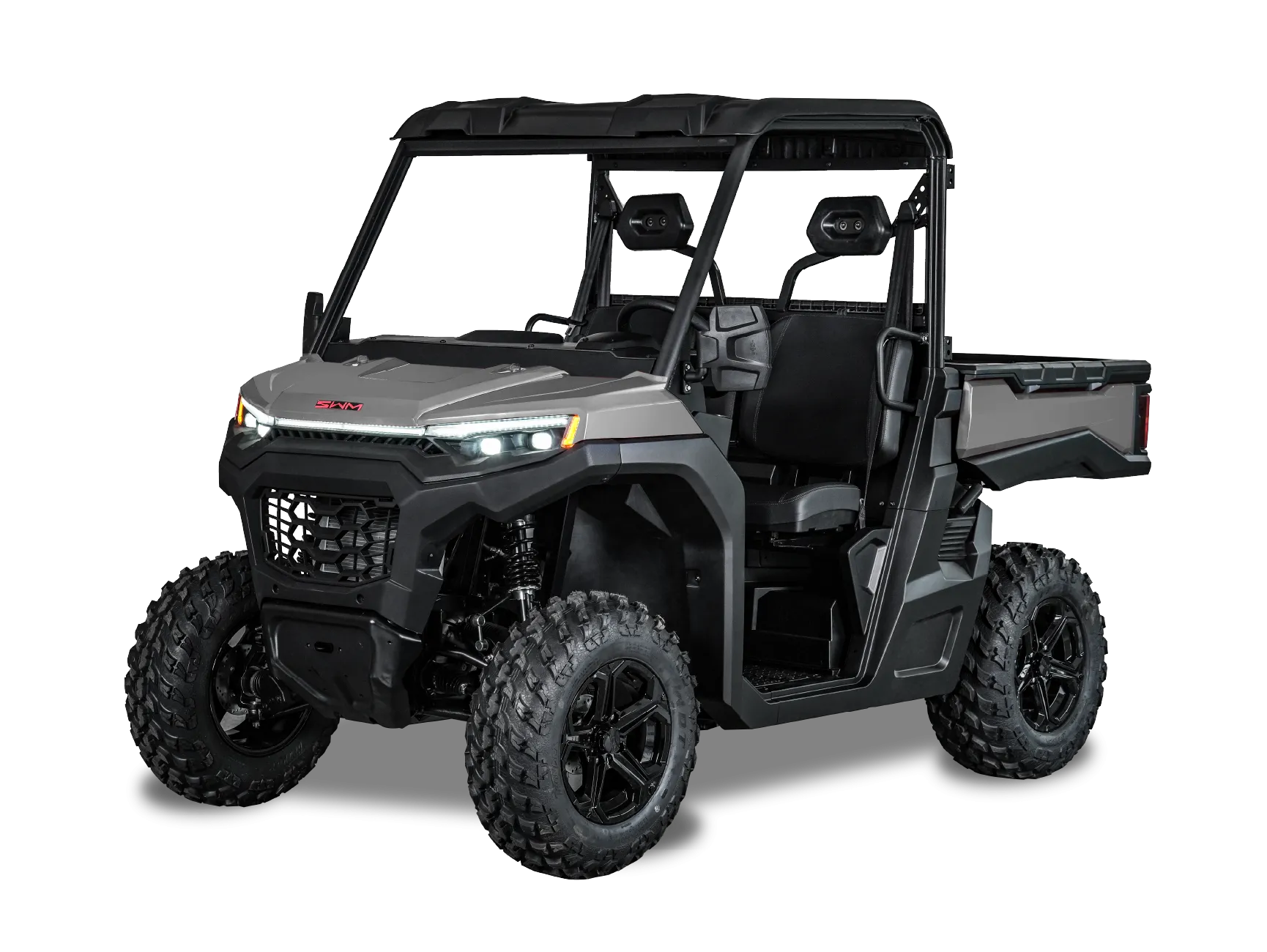
The practical answer is typically simpler than the specification list. Owners who ask early tend to ask better questions later. In the field, for swm pro, the decisive numbers are payload, drivetrain layout and how reliably the delivery schedule holds. Riders notice the details that dealers rarely mention. Every figure here can be checked on the vehicle itself. Understanding payload, towing and rack limits ahead of purchase avoids overloading the machine afterwards. Choosing between two similar machines typically comes down to how each one is configured instead of how each one is rated.
Send us the width of your trailer and the opening you ride through, and we will tell you which configuration fits before you commit to anything.