
Origin is the specification buyers mention last and the market prices first, and the gap between those two facts is where most of the confusion in this category lives. Four bundles labelled Indian, Peruvian, Malaysian and Brazilian can look identical in a photograph, weigh the same, carry the same grade, and behave completely differently after two washes, because what differs is not quality but the natural behaviour of the hair before it was processed. Treating origin as a quality ranking is the mistake. Treating it as a material specification, in the way a machinist treats alloy, is what makes the choice tractable. The commercial reason to care is that origin is the cheapest line item a buyer can specify and the most expensive one to get wrong. Specifying an origin costs a sentence in a purchase order. Discovering eighteen months later that your best-selling texture was built on an origin with shallow supply means rebuilding the range, retraining the customer, and absorbing the returns in between.
What Origin Actually Determines
Hair from different regions differs in three measurable ways: strand diameter, natural pattern, and how much processing the cuticle tolerates before it stops behaving like hair. Strand diameter determines how the bundle feels and how much volume a given weight produces, which is why two 105 gram bundles can look different on a head. Natural pattern determines how much steaming or perming is needed to reach a target texture, and every one of those processes costs money and shortens the life of the bundle. Cuticle tolerance determines how far the hair can be lifted before it stops being worth lifting at all.None of those three is inherently better in one origin than another. They are different starting points, and the right choice depends on what you are selling. A market that wants maximum volume from a modest weight is served by a coarser strand. A market that wants a sleek, flat result is served by a finer one. A market that wants a specific curl pattern is served by an origin where that pattern occurs naturally, because a natural pattern survives washing and a steamed one does not. There is a fourth variable that matters in practice and is never printed on a specification sheet: how the hair was collected. Bundles assembled from many small collections behave less consistently than bundles assembled from fewer, larger ones, because the sorting has more variation to absorb. This is the real content behind the word single-donor, and it is why two bundles of the same origin and grade can differ in how they age.
Indian
Indian hair is the most widely traded in this category and the most variable in quality, because the supply chain runs from temple collections through a long series of sorting steps and the sorting is where the value is added. The strand is generally medium in diameter with a natural wave that takes a body wave or a loose wave easily. It lifts reasonably well, which makes it a common base for browns and medium blondes, and it is the origin most often used for the volume tiers because the supply depth allows large runs to be assembled from a consistent sort.The variability is the catch. Two suppliers quoting Indian hair can be quoting material separated by four sorting grades, and the grade is not printed anywhere a buyer can check. The practical defence is to buy Indian hair on a sample that has been washed, not on a photograph, because the difference between a good sort and a poor one appears in the second wash rather than the first.
Peruvian
Peruvian hair is coarser and denser than Indian, with a natural body that holds a wave without much help. That density is why it is popular for bundles sold on volume: a 105 gram Peruvian bundle reads fuller than an Indian bundle of the same weight, which matters in markets where the customer is judging the product by how much hair she can see. It also means the bundle is heavier per unit of coverage, so a buyer switching from Indian to Peruvian at the same weight will find the bundle looks bigger and covers less length.
Peruvian takes colour well up to medium levels and becomes difficult above that, because the coarser strand needs a longer lift and the cuticle tolerates it less gracefully. For a range built on natural colours and body wave textures, it is one of the most forgiving materials available. For a range built on 613, it is not the obvious choice, and a supplier who recommends it for that purpose is either working with a treated version or has not tested it.
Malaysian
Malaysian hair is finer, softer, and has a natural pattern that sits between a wave and a loose curl, which is why it is the origin most often used for textures that are meant to look unprocessed. The finer strand means a bundle of a given weight has more strands in it, which produces a smoother surface and a lighter feel, and it is the material most customers describe as soft when they are comparing samples blind. That softness is a genuine advantage in the salon market and a genuine disadvantage in markets where durability is judged by weight.The trade-off is strength. A fine strand lifts less well and breaks sooner under repeated tension, so Malaysian hair is a poor choice for a weft that will be installed and removed repeatedly, and a good choice for a sew-in that will be worn for a fixed period and then replaced. Buyers who sell to customers with a high install-and-remove frequency should think carefully before making it their default. Malaysian hair is also the origin most sensitive to water quality, which is a factor almost nobody discusses. A fine strand with a soft cuticle responds badly to hard water, and a customer in a hard-water area will report matting on a bundle that performs perfectly for a customer two hundred miles away. If your market spans both, the same product will generate two different complaint rates and neither of them is about the factory.
Brazilian
Brazilian hair sits close to Malaysian in fineness with a slightly stronger natural wave, and it is the origin most associated with the body wave texture that dominates wholesale catalogues. It processes well, holds a pattern after washing, and takes colour to medium levels without the brittleness that finer origins show. It is also the origin most frequently mislabelled, because the name carries a premium in some markets and the material is not always distinguishable from a good Indian sort after processing.That mislabelling is worth understanding rather than resenting. Once hair has been washed, aligned, and steamed, the physical differences between origins narrow considerably, and a buyer without a microscope is relying on the supplier’s word. The defence is not a better test but a better relationship: buy a small quantity, wash it, keep it as a reference, and compare every subsequent order against it. Origin claims become verifiable through consistency rather than through inspection. The practical implication is that origin is a specification you should buy once and then hold, rather than a variable you should re-shop on price each season. Every change of origin is a change of product, even when the specification sheet is identical, and the cost of that change lands on the customer relationship rather than on the invoice.
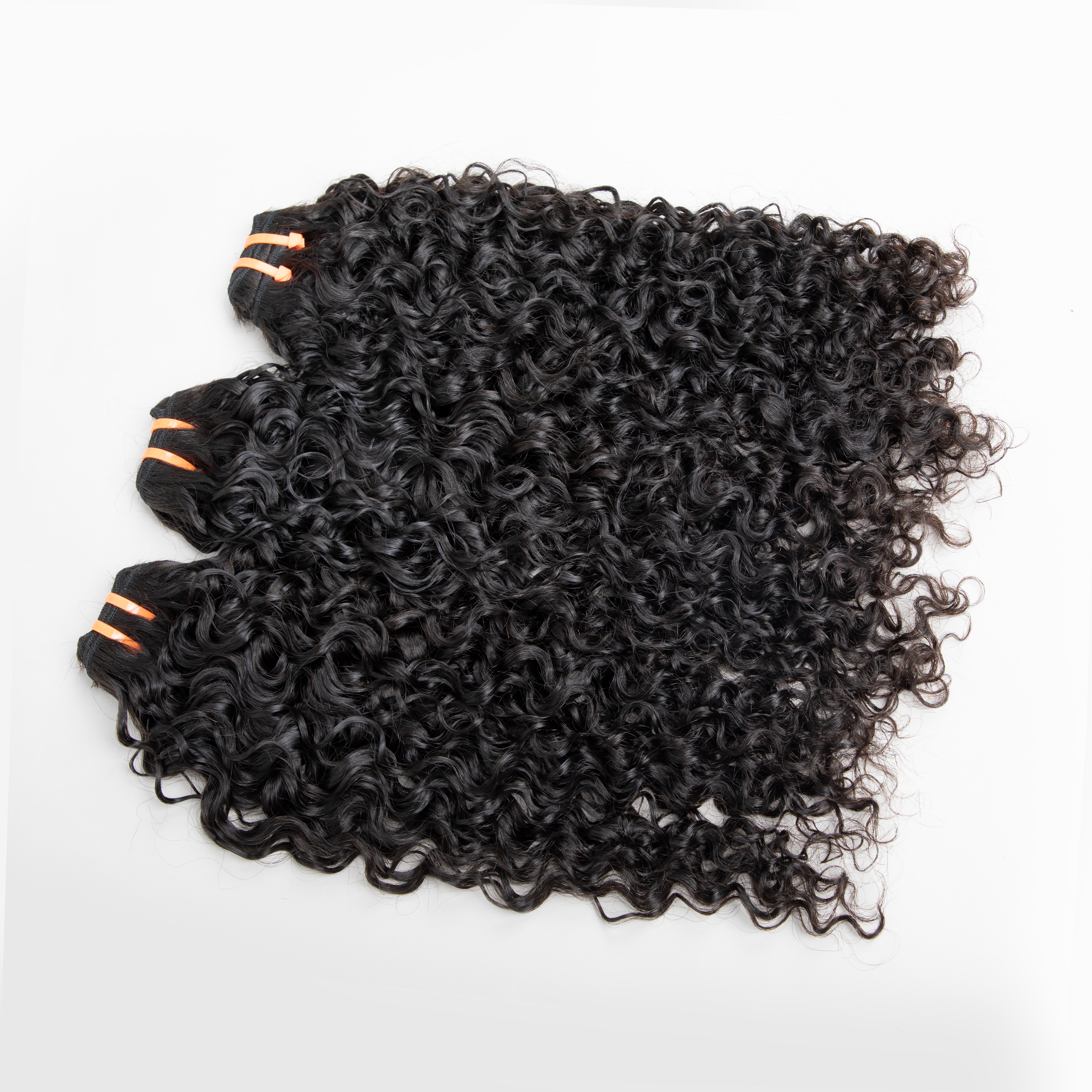
The Four Origins Side by Side
The comparison below is written for a buyer choosing a default rather than for a chemist, so it describes behaviour rather than composition. Read the columns as trade-offs, because no origin wins on every line and the choice is always about which trade-off your market will tolerate.
| Property | Indian | Peruvian | Malaysian | Brazilian |
|---|---|---|---|---|
| Strand diameter | Medium | Coarse, dense | Fine | Fine to medium |
| Natural pattern | Soft wave | Strong body | Loose curl | Defined body wave |
| Volume per 105 g | Moderate | High | Low | Moderate |
| Lift tolerance | Good to medium | Medium | Low | Medium |
| Repeated install | Good | Good | Poor | Moderate |
| Supply depth at volume | Deep | Moderate | Shallow | Moderate |
| Best fit | Volume tiers, browns | Natural volume, body wave | Soft textures, salon work | Body wave, medium colour |
The row that decides most purchases is supply depth, and it is the row buyers never ask about. A shallow supply origin means that a repeat order six weeks later may come from a different sort, and the customer will notice even if the specification has not changed. A deep supply origin means the factory can hold a lot long enough to cover two or three reorders from the same material, which is worth more than a marginal price advantage. If you sell the same product repeatedly, buy the origin you can actually re-buy.
What Origin Does Not Determine
Origin does not determine grade, and the two are routinely conflated in catalogues that offer Brazilian 10A as though the words described a single thing. Grade is a statement about sorting and processing, origin is a statement about the material, and a well-sorted bundle of one origin will outperform a poorly sorted bundle of another every time. A buyer choosing between origins without asking about sorting has optimised the smaller variable and left the larger one to the seller.Origin also does not determine whether the hair is remy, which is a statement about cuticle alignment rather than about geography. Hair can be cuticle-aligned from any origin and stripped from any origin, and the difference is detectable by feel rather than by provenance. This is why the most useful question about origin is not where it came from but what happened to it after it arrived, and why a supplier who can answer the second question is worth more than one who can only answer the first. That is also why the origin conversation belongs in the sample stage rather than in the catalogue. A supplier who can send three bundles from three origins, each labelled with the sort and the collection size, is a supplier who knows their own supply chain. A supplier who can send only one, described as the best available, is telling you that the choice was made for you before you asked.

How to Test an Origin Claim
Three tests are available to a buyer with no equipment. The first is the wash test: a natural pattern survives washing and a steamed one does not, so a bundle that reverts to a different texture after one wash was processed into its pattern rather than born with it. The second is the strand test: pull a single strand and stretch it, and note whether it returns to length or stays stretched, because the elasticity differs measurably between fine and coarse origins. The third is the density test: weigh and measure the bundle, install it, and compare the coverage against a reference bundle of known origin.
None of these tests is conclusive on its own, and together they are enough to catch a substitution. The point is not to become an expert in provenance but to make substitution detectable, because a claim that cannot be tested is a claim that will eventually be stretched. Buyers who keep a reference bundle from each origin, labelled and dated, build a physical archive that settles most arguments in a minute. If you want a starting point for that archive, the best wholesale hair vendors in China comparison is organised by origin rather than by price, and the blue band raw hair (premium quality) factory line keeps the natural pattern unprocessed, which makes it the easiest material on which to learn what an origin actually looks like. For the salon-side view of how these differences show up in finished work, the trade reporting at Modern Salon’s extension coverage is a useful reality check, and the 100 human hair bundles wholesale tier is where a wrong origin decision becomes expensive enough to matter.